
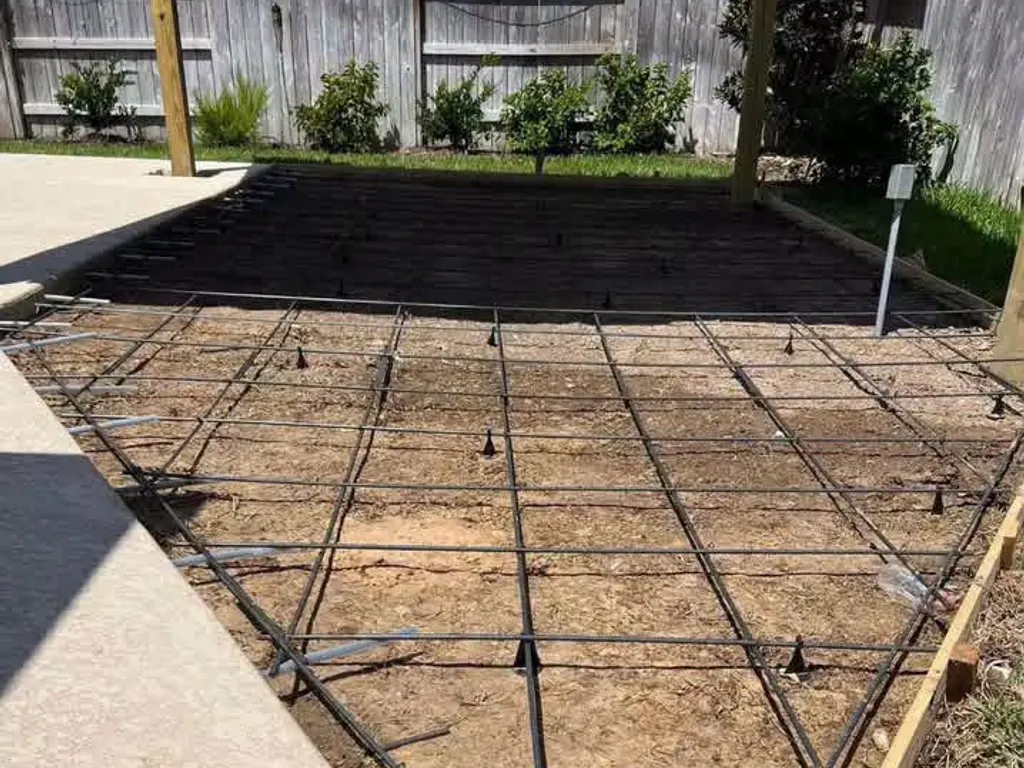
Your new concrete looks great the day it is poured, but it is not done yet. Concrete keeps getting stronger for weeks as it cures. What you do in that first month makes a real difference in how long it lasts.
Here is the simple guide we give our customers.
The First 24 to 48 Hours
Keep people, pets and anything heavy off the new slab. It may look hard, but the surface is still easy to mark. If a storm is coming, do not worry. We plan our pours around the forecast, and light rain after the finish has set usually does no harm.
When Can I Walk on It?
Most of the time you can walk on a new patio or walkway after 24 to 48 hours. Wear normal shoes and avoid dragging anything across it.
When Can I Drive on It?
Wait about seven days before parking a car on a new driveway. Wait closer to 30 days before parking anything heavy, like a loaded truck, a trailer or an RV. We will give you exact timing for your project.
Keep It From Drying Too Fast
Houston heat can pull water out of new concrete quickly. If we ask you to, lightly mist the slab with a hose in the morning and evening for the first few days. This helps it cure evenly and gain strength.
Hold Off on Furniture and Grills
Give your new patio about a week before setting heavy furniture or a grill on it. Use pads under metal furniture legs to prevent rust stains.
Is Some Cracking Normal?
Yes. Concrete shrinks a little as it dries, and fine hairline cracks are common, especially in the first few months. That is exactly why we cut control joints. They give the slab a planned place to crack so any lines show up neatly inside the joint instead of across the middle of your patio.
What is not normal is a wide crack, a section that sinks or a piece that rocks when you step on it. If you see anything like that, call us so we can take a look.
Watch Out for These Common Mistakes
Using deicing salts. Houston rarely freezes, but during the occasional cold snap, do not throw rock salt on new concrete. It can damage the surface. Use sand for traction instead.
Pressure washing too soon. Wait at least a month before using a pressure washer. When you do, keep the tip moving and do not get too close, or you can etch the finish.
Parking at the edges. The edges of a driveway are its weakest point. Try to keep tires on the main part of the slab, especially for the first month.
Letting water pool. If a downspout dumps water right onto the slab or along its edge, add an extension or splash block. Standing water near the edges can wash out the soil underneath over time.
What About Sealing?
Sealing is optional, but it helps. A good penetrating sealer makes the surface resist oil, rust and leaf stains, and it helps water bead up and run off. Wait until the concrete has fully cured, usually about 30 days, before you apply any sealer. Plan to reapply every two to three years.
Long-Term Care
- Rinse off dirt and leaves now and then so they do not stain.
- Clean oil spills on the driveway quickly with dish soap and a stiff brush.
- Consider a quality sealer after the first few months to help resist stains.
- Keep gutters and downspouts pointed away from the slab.
Quick Timeline Recap
| Time After Pour | What You Can Do |
|---|---|
| 24 to 48 hours | Light foot traffic |
| 3 to 7 days | Patio furniture and grills (use pads) |
| 7 days | Regular cars on a new driveway |
| 30 days | Heavy trucks, trailers, sealing and pressure washing |
Every project is a little different. Thicker slabs, cooler weather and shade can all slow curing down, so always follow the timing we give you for your specific job.
Questions After Your Pour?
We are always a phone call away. If you notice something that does not look right, call Quality Construction at (346) 460-3911. If you are still planning your project, see our concrete driveways page, check our service area in Houston, or get a free estimate.