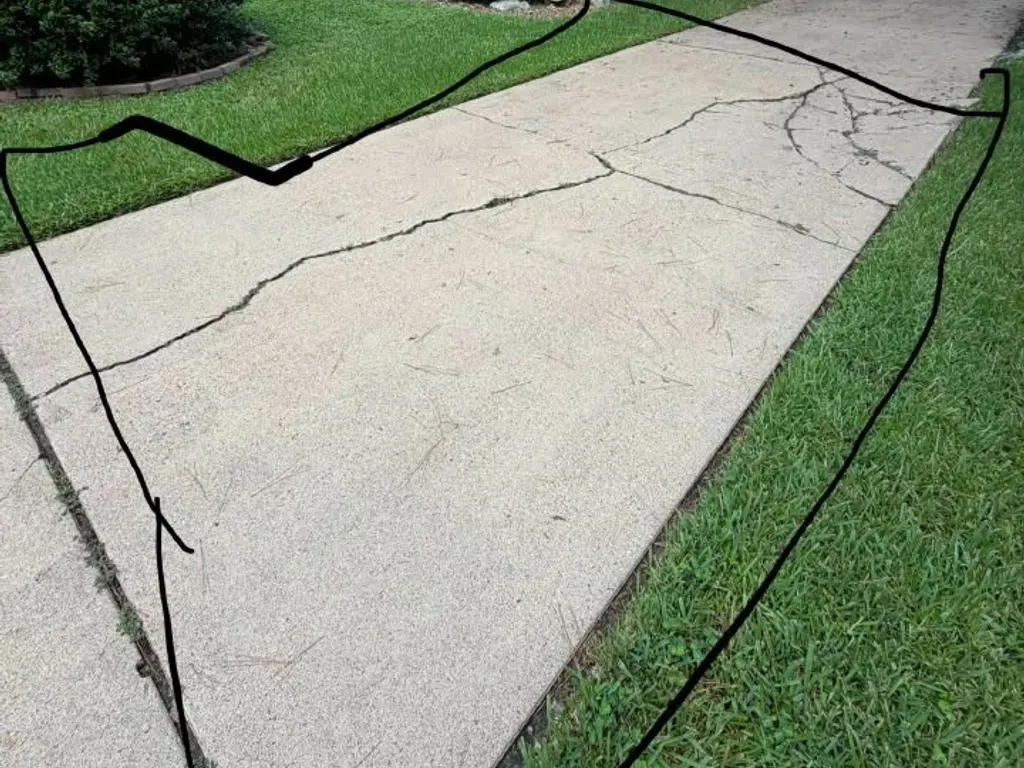
If you have lived in Houston for a while, you have seen it: a driveway with a long crack running across it, a patio that has sunk on one corner, a sidewalk where one slab sits an inch higher than the next. Cracked concrete is everywhere here. The good news is that most of it can be prevented with the right prep work.
Here is why it happens and what we do about it at Quality Construction.
Houston Sits on Clay That Moves
Most of the Houston area is built on expansive clay soil. When it gets wet, it swells. When it dries out during a long, hot summer, it shrinks and pulls away. That constant up and down movement puts stress on anything sitting on top of it, including your concrete.
A slab poured straight onto that soil, with no real base and no steel, has nothing to hold it together when the ground moves. It cracks wherever it is weakest.
Heavy Rain Washes Out the Base
Houston gets a lot of rain, and it often comes all at once. When water runs under a slab, it can wash away the soil and leave hollow spots. Over time the concrete above those spots has nothing to rest on, so it sinks and breaks.
That is why drainage matters so much. Every patio and driveway should slope away from your house, and water should have somewhere to go.
Tree Roots Push Up From Below
In places like Spring, where big pines and oaks grow close to the house, roots are a common cause of cracking. As roots grow they lift the slab from below. Sidewalks and driveways near large trees are especially at risk.
How We Prevent Cracks
No contractor can promise concrete will never crack. Concrete shrinks as it cures, and some hairline cracking is normal. But there is a big difference between a fine line and a slab that breaks apart. Here is what we do on every job:
- Build a real base. We grade the soil, bring in select fill and compact it so the slab has firm, even support.
- Use steel rebar on chairs. We set a full grid of rebar and lift it on chairs so it sits in the middle of the slab. Rebar lying on the dirt does almost nothing.
- Slope for drainage. Every pour is pitched so water runs away from your foundation.
- Cut control joints. These are the straight lines you see in good concrete. They give the slab a planned place to crack, so any movement happens in a neat line instead of a random one.
- Pour the right thickness. Driveways get a thicker slab than walkways because they carry cars every day.
Signs Your Concrete Has a Base Problem
Not every crack means trouble. Here is how to tell the difference between normal wear and a problem underneath:
- Hairline cracks inside a control joint are normal and expected.
- Cracks wider than a credit card often mean the slab has moved.
- One side of a crack sitting higher than the other points to settling or roots.
- Hollow sounds when you tap the slab can mean soil has washed out below.
- Water pooling against the house after rain means the slope is wrong.
If you see two or more of these, the base under your slab likely needs work.
Why Cheap Concrete Costs More Later
The difference between a cheap pour and a good one is mostly hidden. You cannot see the base, the rebar or the thickness once the concrete is finished. That is why low bids can be tempting. But skipping steel or pouring on loose soil saves a little money today and costs a full replacement a few years from now.
When you compare quotes, ask each contractor how thick the slab will be, whether they use rebar on chairs or wire mesh, and how they prepare the base. The answers will tell you a lot.
When to Repair and When to Replace
Small, tight cracks can often be sealed. But if your driveway has wide cracks, sunken sections or pieces that rock when you step on them, patching will not last. The problem is underneath. In that case, driveway replacement with a rebuilt base is the fix that holds up.
If you are planning a new concrete patio or want to know whether your current driveway can be saved, call Quality Construction at (346) 460-3911. We will come out, take a look and give you an honest answer. You can also request a free estimate online.